
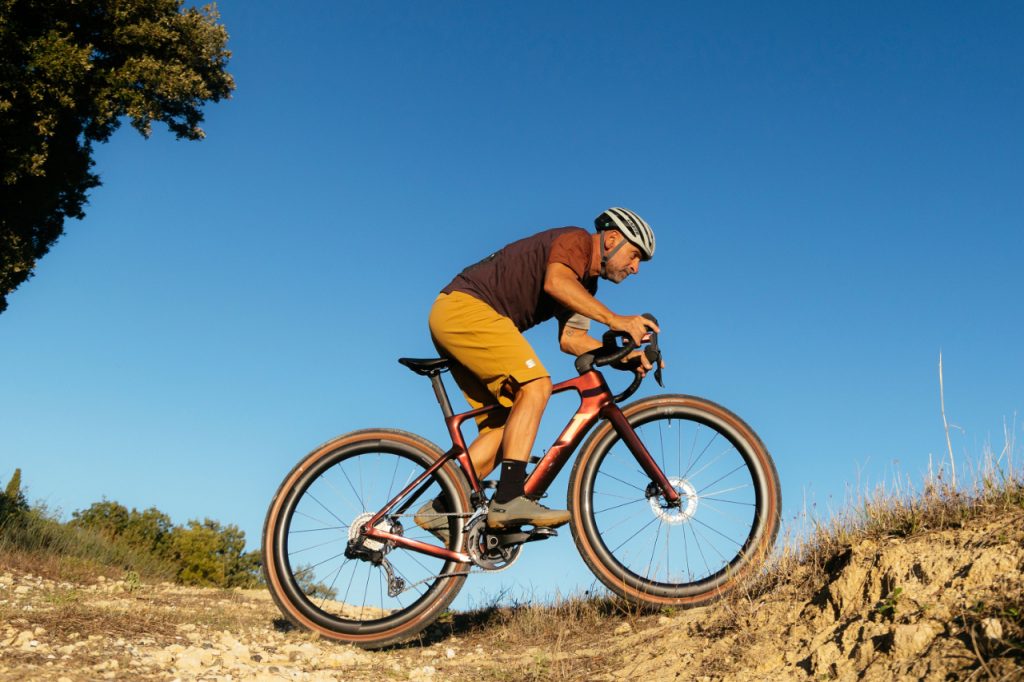
A brief look at Paolo Bettini and his remarkable cycling career. The Olympic “summit” of 2004, the two consecutive World Championships, the “Monuments” and the Grand Tours stage wins trilogy.
By Thanasis Gkrekoukias
Main photo © Chiara Redaschi
Paolo Bettini will take part this year in the Megalopolis Gravel Classic (April 25–26 in Megalopolis). The Italian rider, founder and organizer of the GeoGravel Tuscany-Le Strade Grigie, is a true living legend of world cycling. “Paolino” was born on April 1, 1974, in Cecina, a small coastal town in Tuscany. His first bicycle was a used frame onto which his father assembled all the remaining parts, also taken from old bikes.
Success came quickly, first at local level and then nationally, and in 1997, at the age of 23, Bettini turned professional, signing with the Italian team MG Maglificio-Technogym as a domestique for Michele Bartoli. In 1998 he moved to Asics-CGA and shortly after, in 1999, to Mapei-Quick-Step, again as a teammate of Bartoli. One year later, in 2000, came Bettini’s first major victories: Liège–Bastogne–Liège followed by a stage win in the Tour de France.
At the 2001 World Championships in Lisbon, he won the silver medal behind Óscar Freire, after Bartoli refused to support him in the sprint lead-out, highlighting the tense relationship between the two Italians. In 2002 he claimed a second victory at Liège–Bastogne–Liège and won the UCI Road World Cup, a competition created in 1989 that ranked riders based on results in the ten most important one-day Classics of the season, and which was discontinued in 2005.
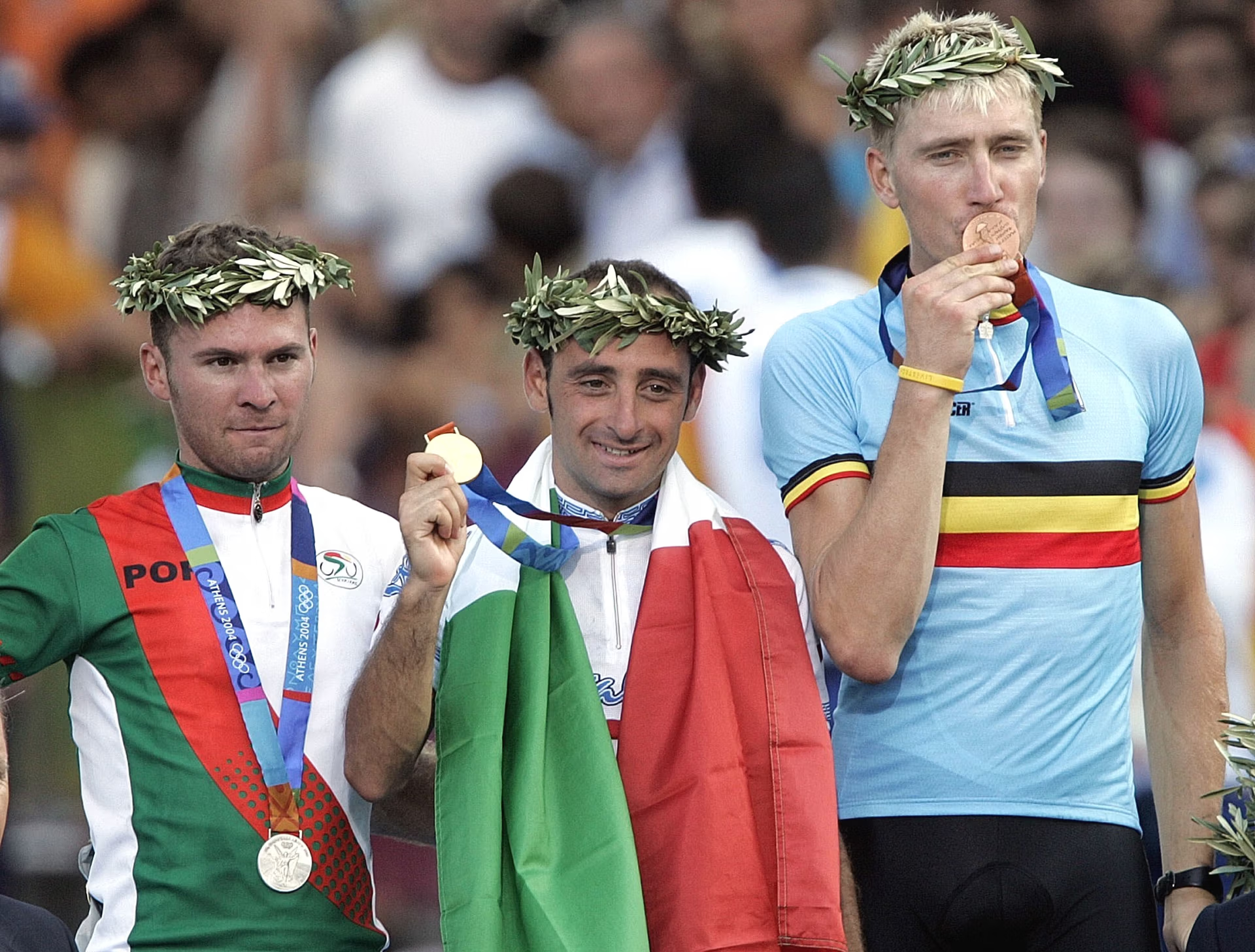
In 2003 Bettini secured his third “Monument”, Milano–Sanremo, as well as the Clásica de San Sebastián, the Italian National Road Race Championship and his second consecutive UCI Road World Cup title. Then came 2004, one of the defining moments of his career, at the Athens Olympic Games. In the 211-kilometre road race, Bettini broke away with Sérgio Paulinho and, overtaking the Portuguese rider in the final meters of the sprint, was crowned Olympic champion.
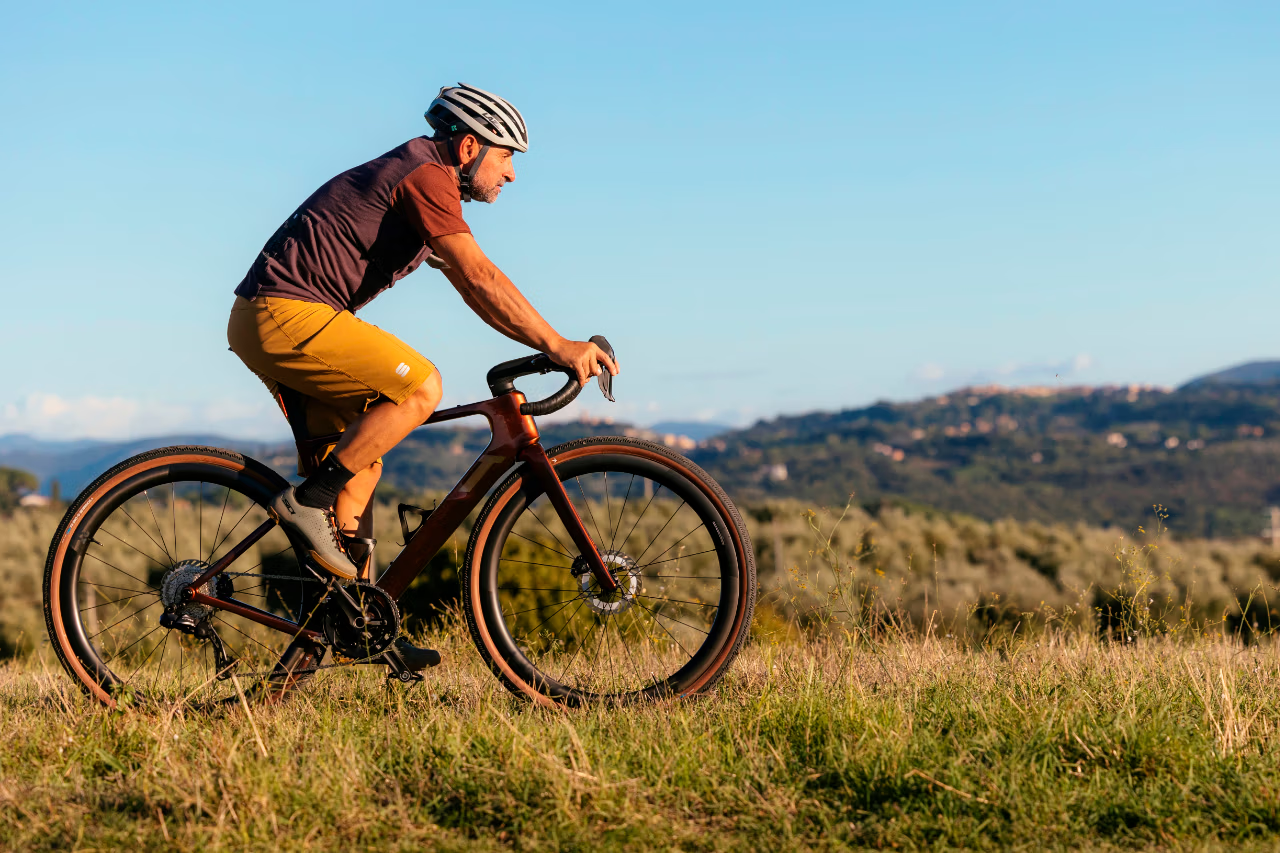
Having secured his third straight UCI Road World Cup title in its final edition in 2004, as well as Tirreno–Adriatico that same year, the only week-long stage race victory of his career, “Paolino” continued his string of major successes in 2005. He completed the Grand Tour stage-win trilogy with victories in the Giro d’Italia, where he also claimed the maglia ciclamino points classification, and the Vuelta a España. That same year he became Italian national champion again and finished the season with another “Monument” victory at Il Lombardia.
Μέσα στο 2006, ο Μπετίνι πρόσθεσε στο παλμαρέ του δυο ακόμα νίκες σε ετάπ, μια στον Γύρο Ιταλίας (και πάλι με τη maglia ciclamino των πόντων) και μια στον Γύρο Ισπανίας, κατέκτησε ξανά τον τίτλο του πρωταθλητή Ιταλίας στην αντοχή και ήρθε πρώτος για δεύτερη σερί χρονιά στον Γύρο της Λομβαρδίας. Όμως το highlight της σεζόν ήρθε για τον Ιταλό στις 24 Σεπτεμβρίου και το Παγκόσμιο Πρωτάθλημα στο Σάλτσμπουργκ της Αυστρίας, στο αγώνισμα της αντοχής, όταν μετά από 265 χιλιόμετρα ξεπέρασε στο σπριντ τους Έρικ Τσάμπελ και Αλεχάνδρο Βαλβέρδε, για να ανακηρυχθεί παγκόσμιος πρωταθλητής.
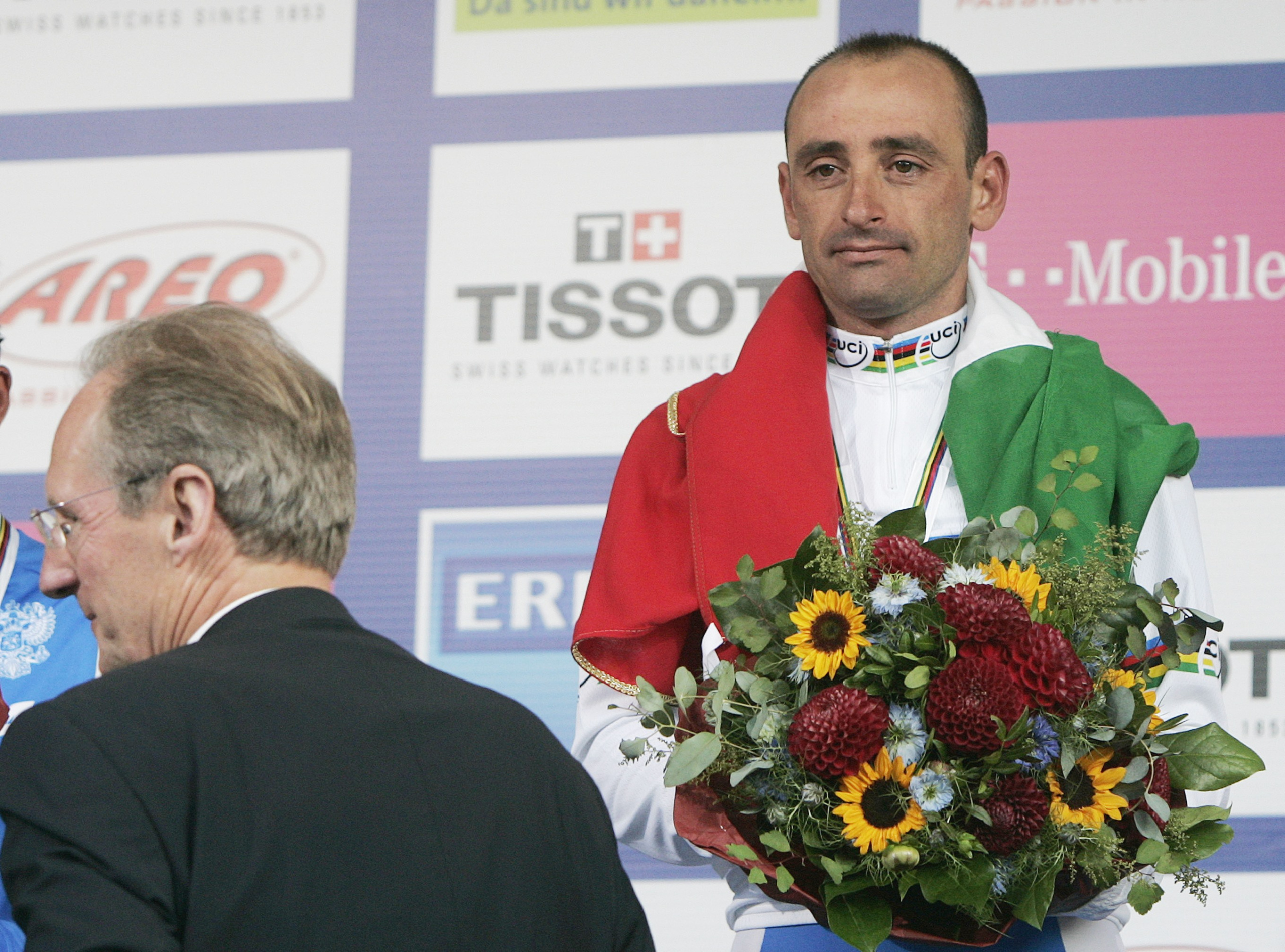
In 2006 Bettini added two more Grand Tour stage wins, one in the Giro d’Italia, again taking the maglia ciclamino, and one in the Vuelta a España. He reclaimed the Italian national title and won Il Lombardia for a second consecutive year. The highlight of the season came on September 24 at the World Championships in Salzburg, Austria. After 265 kilometres in the road race, Bettini outsprinted Erik Zabel and Alejandro Valverde to become world champion.
His outstanding performances throughout 2006 earned him the Vélo d’Or award as the world’s best cyclist of the year. In 2007 he added another Vuelta stage win and, a week later, on September 30 at the World Championships in Stuttgart, Germany, he delivered another spectacular performance in the road race, winning with a powerful final sprint ahead of Alexandr Kolobnev (Russia) and Stefan Schumacher (Germany) to claim his second consecutive world title.
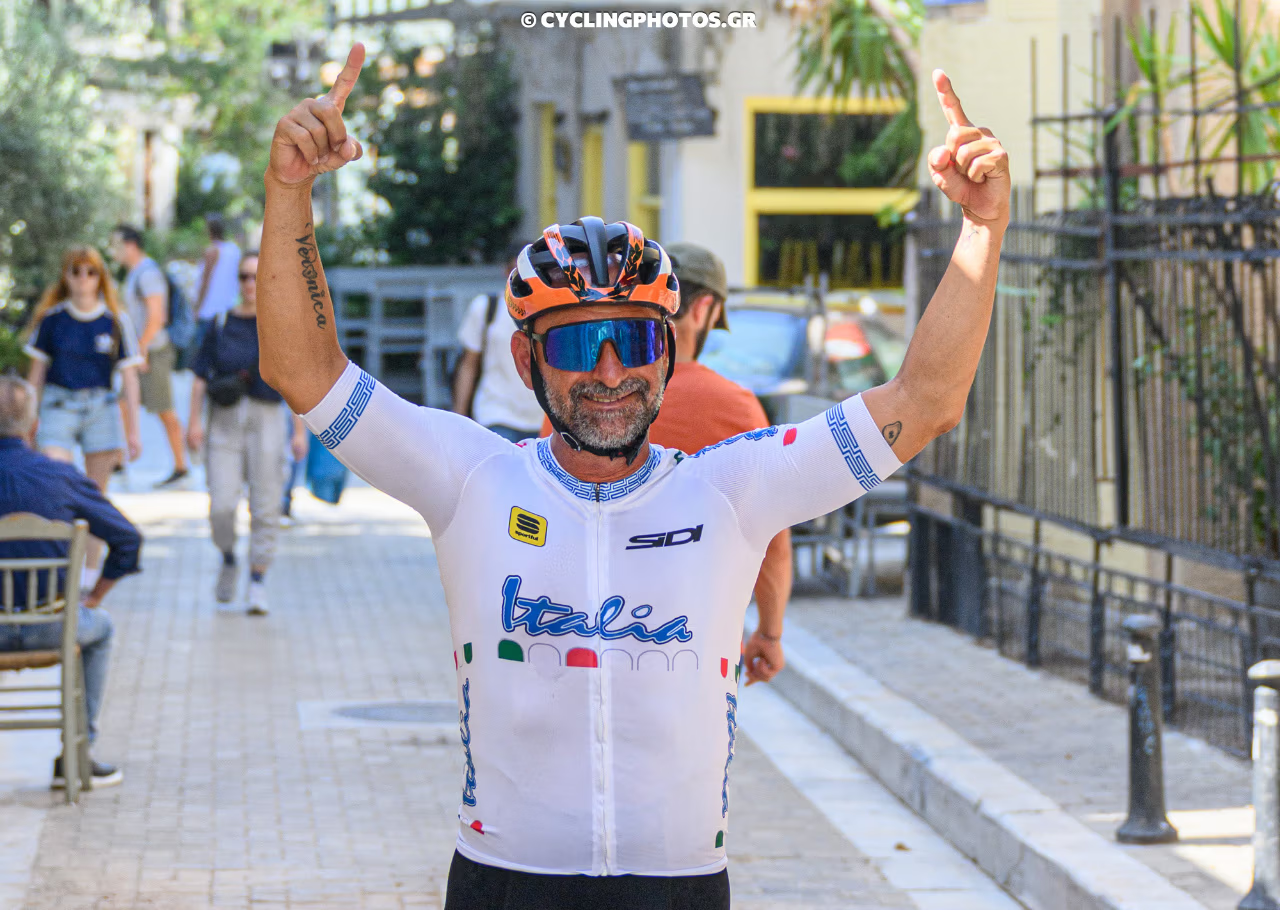
In June 2010 he became head coach of the Italian national team, succeeding Franco Ballerini. In 2014 he resigned in order to take on the role of general manager for the new professional team being prepared by Fernando Alonso, a project that ultimately never materialized. In 2023 he launched GeoGravel Tuscany – Le Strade Grigie, now one of Italy’s most renowned gravel events, combining cycling with tourism, gastronomy and local culture.
In summary, Paolo Bettini was the leading Classics specialist of his generation, an exceptional puncheur, equally adept at explosive sprints and repeated sharp attacks, with a distinctive personal style that earned him the nickname “Il Grillo” – the Cricket. His Olympic gold medal in 2004, the two World Championship titles in 2006 and 2007, five “Monument” victories and eight Grand Tour stage wins stand out among his 61 professional victories.
His participation in this year’s Megalopolis Gravel Classic is therefore a great honor and a special source of excitement for all participants, who will have the opportunity to meet him and ride alongside him on the beautiful gravel roads of Arcadia.