
Megalopolis was founded in 370 BC as the capital of the Arkadian League, an alliance formed by 40 Arcadian settlements at the instigation of the Theban general Epaminondas (after the Thebans' victory over the Spartans in 371 BC at Leuctra in Boeotia), with the aim of creating a center for all Arcadians and a rival power to neighboring Sparta.
By Thanassis Krekoukias
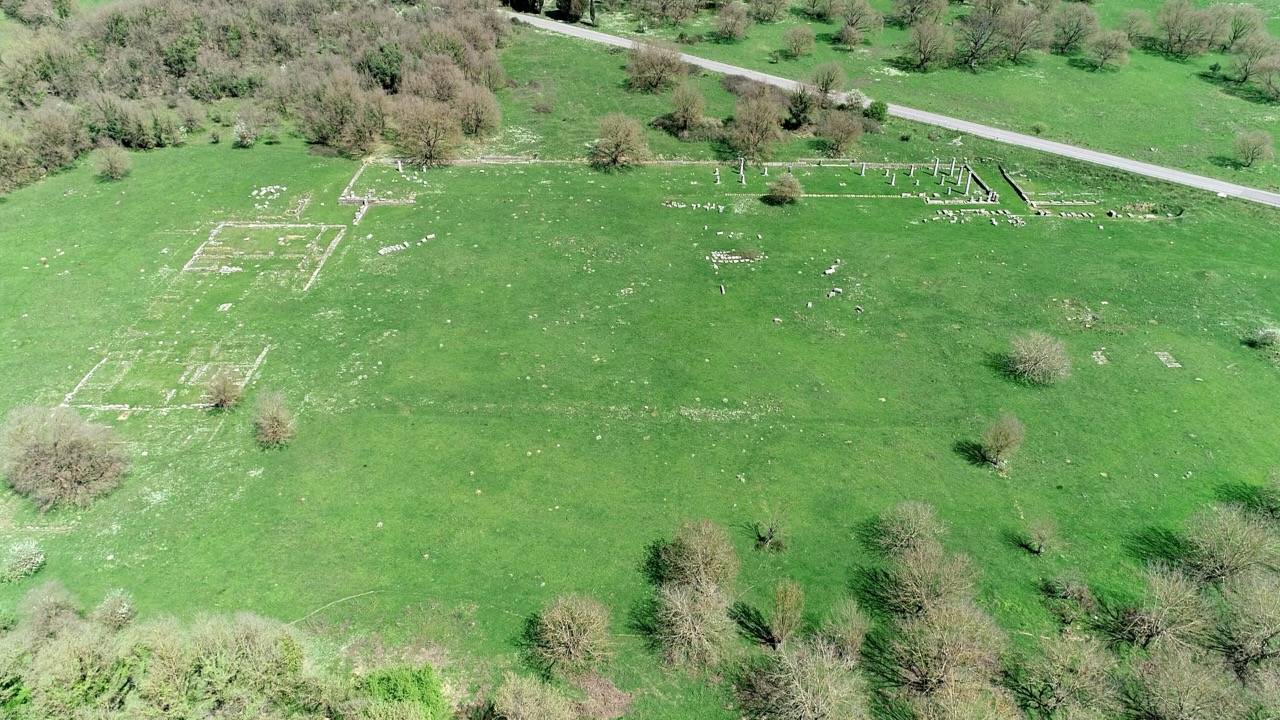
The archaeological site of ancient Megalopolis is located about two kilometers north of the modern city, next to the Megalopolis-Karytaina provincial road and very close to the point where the Elissonas River flows into the Alpheus. The most important monuments are the Ancient Theater, the Thersileion Bouleuterion and the ruins of the ancient Agora, where the Sanctuary of Zeus Soter, the Philippian Stoa, and part of the Myropolid Stoa have been excavated. It is also estimated that the wall of the ancient city was 8.850 meters long.
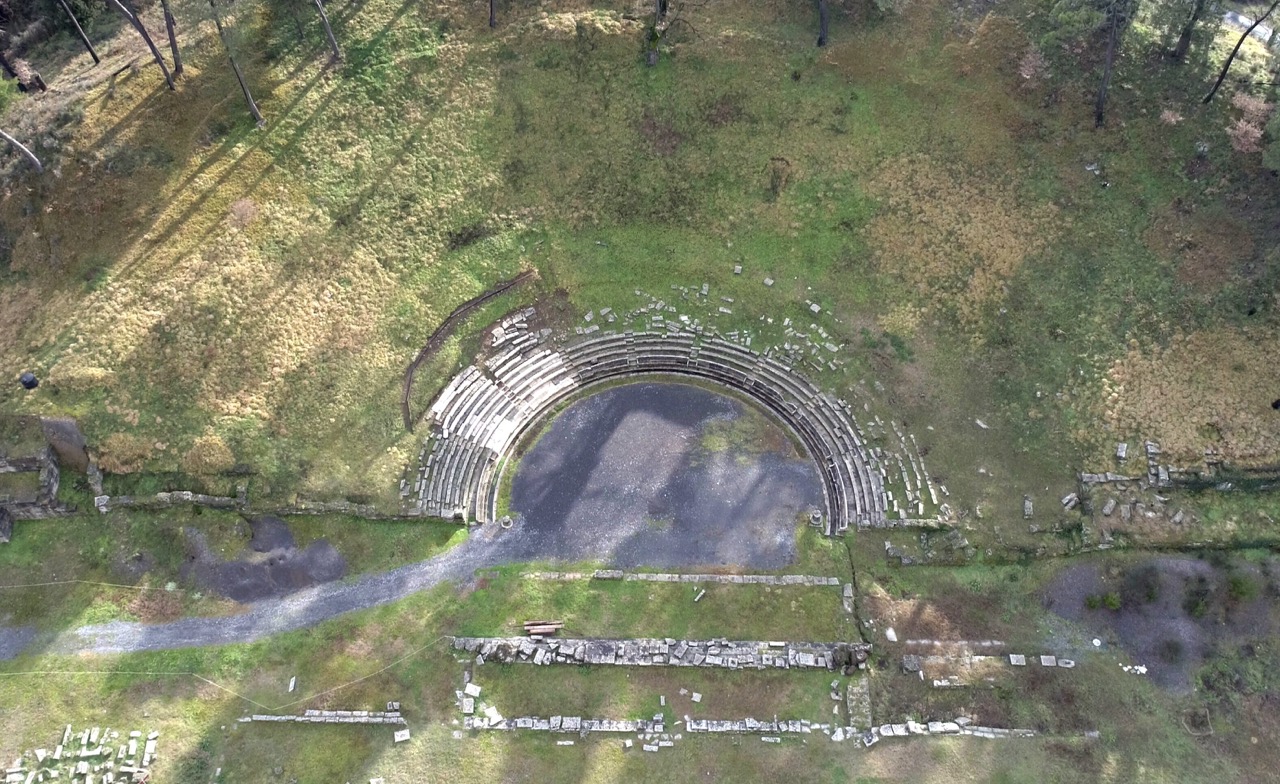
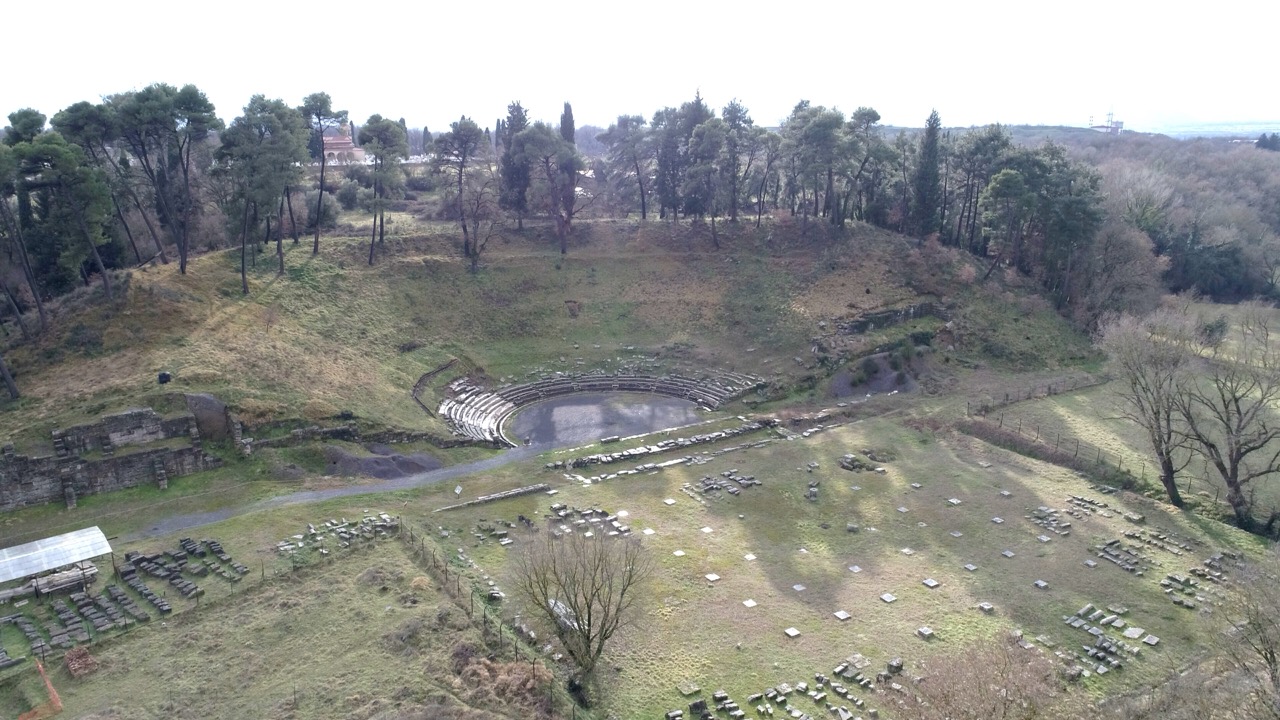
The central monument is the Ancient Theater, a representative example of the heyday of the Arcadian Federation and the powerful Great City, which experienced splendor and grandeur but was lost within two centuries. It was built shortly after 370 BC by the Argive Polykleitos on an artificial hill. The cavea – the area where the spectators sat – had a diameter of 145 meters, while the orchestra – the circular area where the actors performed – was approximately 30 meters in diameter. A stone conduit was built around the perimeter of the orchestra to collect and drain rainwater.
Only the lower part of the theatre's enormous cavea survives. The cavea was divided by ten steps into nine tiers, supported by two vertical walls and included two diazomata with 20 rows of seats in the two lower parts and 17 in the upper part (it is estimated that there were a total of 55 to 59 rows of seats). Its capacity is estimated to have ranged between 18.000 and 20.000 spectators (as a comparison, the ancient theater of Epidaurus can seat 14.000 people).
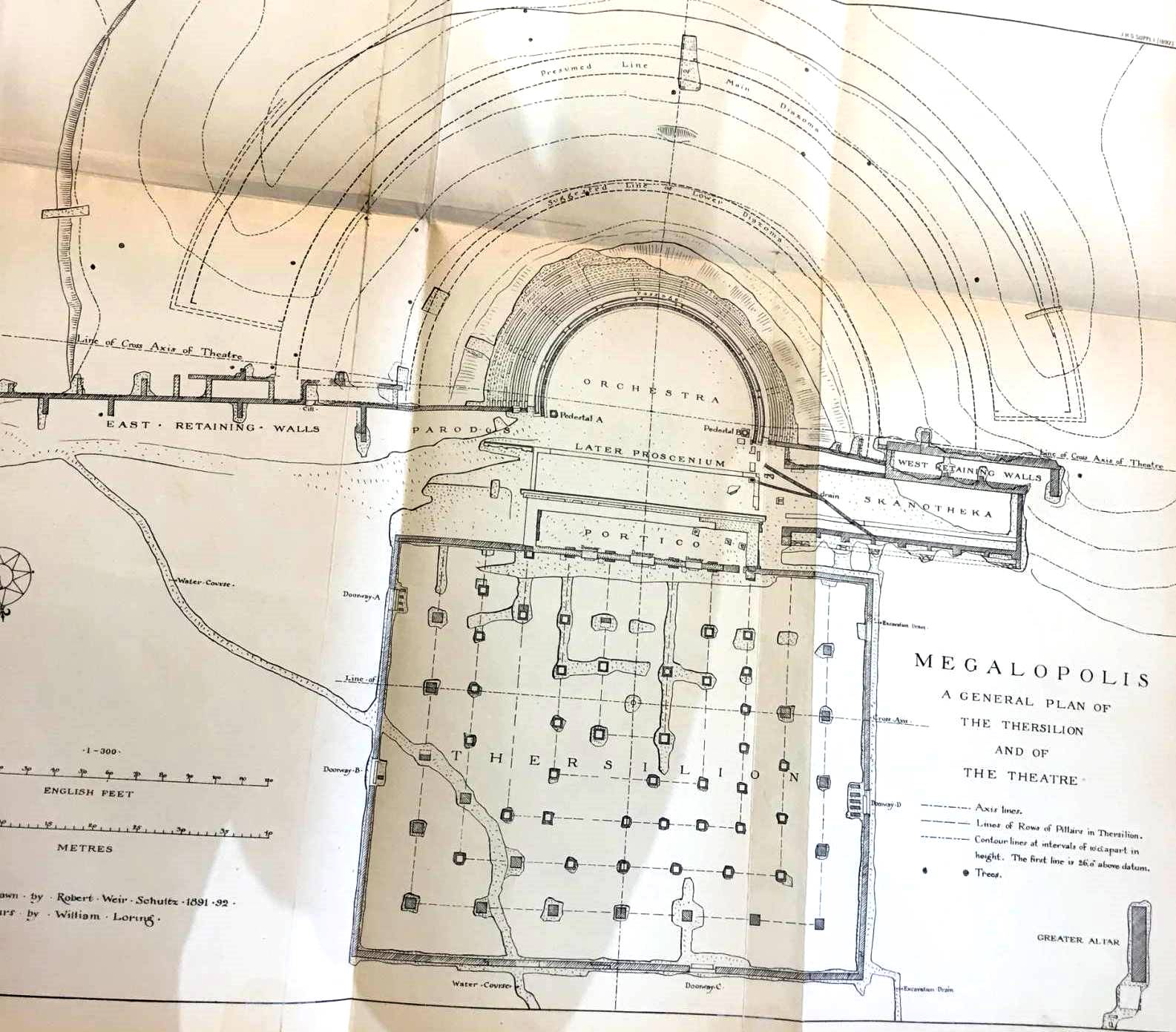
In the front row of each stand was the presidency, a row of separate seats for officials. These seats had backrests (known as erisinoto). The erisinoto in the two outer stands are engraved with the name Antiochus, while the rest bear the names of the six tribes that made up the inhabitants of Megalopolis. Behind the orchestra, you can see the remains of a rectangular building (31 meters by 7 meters) that was the proscenium, i.e., the portico on the roof of which the actors appeared.
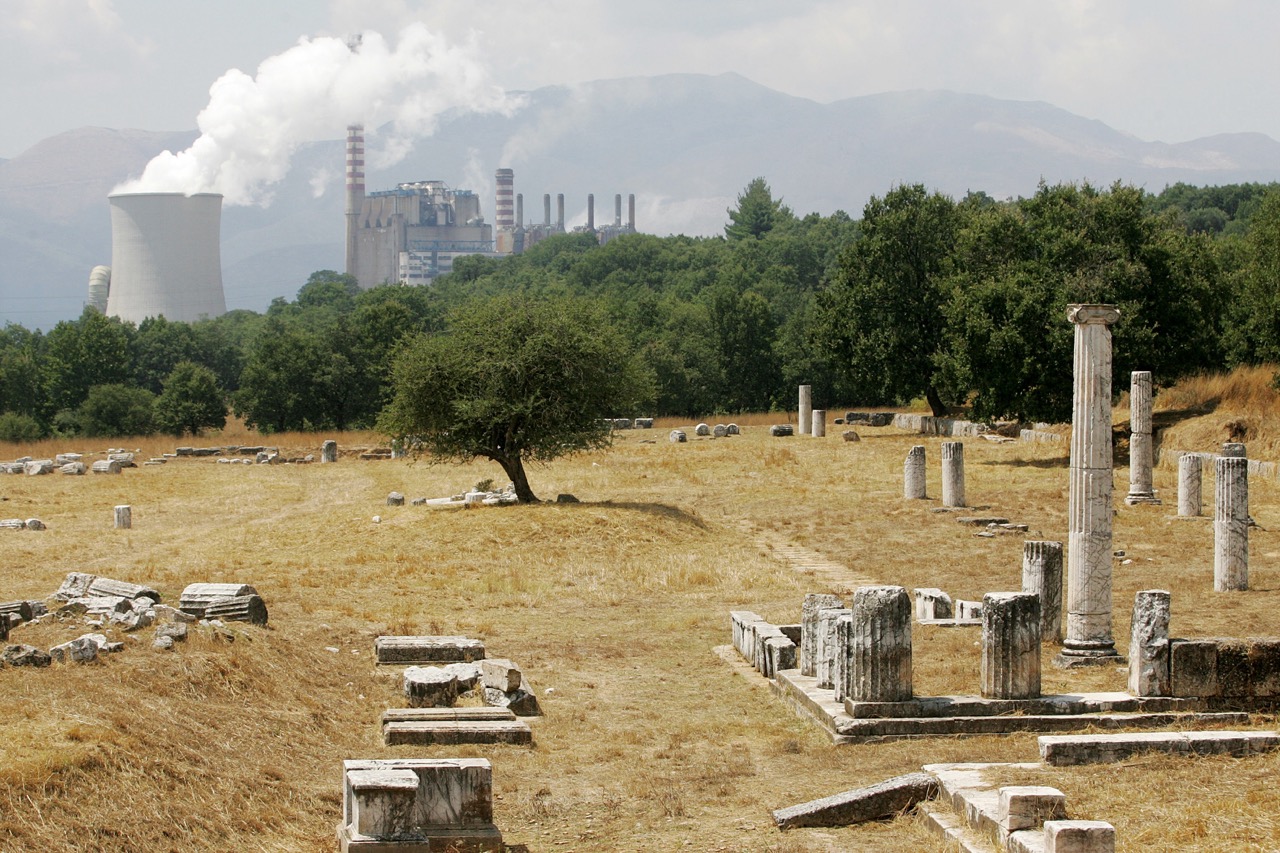
This building was built around 200 BC, when the Thersileion, the large building located just behind the theater, ceased to be used. Until then, the large portico at the entrance to the Thersileion served as the proscenium, along with a mobile wooden stage on wheels, which was pulled into the stage house, where it was stored. The Thersileion Bouleuterion took its name from Thersilas, a wealthy Arcadian from Orchomenos in Arcadia, who financed its construction. It was one of the first public buildings to be built in the Agora of the new city.
It is a rectangular building where the Myrians, i.e. the 10.000 representatives of the cities of the Arcadian League, held their meetings (it could seat 6.000 people and accommodate 10.000 standing). At their meetings, they decided on matters of war, peace or alliances. Today, the bases of the marble columns that supported its roof are still preserved. After 200 BC, when the Thersileion fell into disuse, the representatives of the Arcadian federation gathered in the theater. It was also the venue for the dances during the great festivals of the Arcadians.
The theater of Megalopolis was the largest in the ancient Greek world and was an important intellectual and artistic center in the wider region. As Pausanias characteristically states, "the part of the river beyond the midday line provided the largest theater in Greece" (Paus. VIII, 32.1). During the 1890-91 excavation season, the British School of Archaeology uncovered the orchestra, the presidium, the lower stone seats, the imposing parapets of the parodos (the two vertical walls) and the foundations of the stage, while the foundations of the Thersileion and its portico facing the theater were cleared.
Archaeologists Ernest Gardner, William Loring, G. Richards, W. Woodhouse, and architect Robert Schultz are the most important names associated with the excavations that brought to light the antiquities of Megalopolis. After many years of inaction by the state to support and maintain the theater – in fact, part of its cavea collapsed a few years ago – restoration work is already underway at the entrance, while excavations are in progress in the area of the Thersileion.
Main photo: The surviving ruins of the ancient theater of Megalopolis © Municipality of Megalopolis
* Sources: megalopoli.gov.gr, odysseus.culture.gr, sfathmegalopolis.gr, wiki