

The world's oldest wooden tools, dating back 430,000 years, were discovered at the Marathoussa 1 site!
By Thanassis Krekoukias
Two wooden artifacts – bearing clear signs of human intervention and use – are among the most important of the hundreds of finds that have recently come to light, as part of the excavation activity that has been ongoing in recent years in the lignite mining area of Megalopolis. According to Ms Katerina Harvati, paleoanthropologist at the University of Tübingen and head of the research team, the Megalopolis finds are the oldest known in the world and push back the use of wooden tools by humans by 40,000 years earlier than we previously believed.
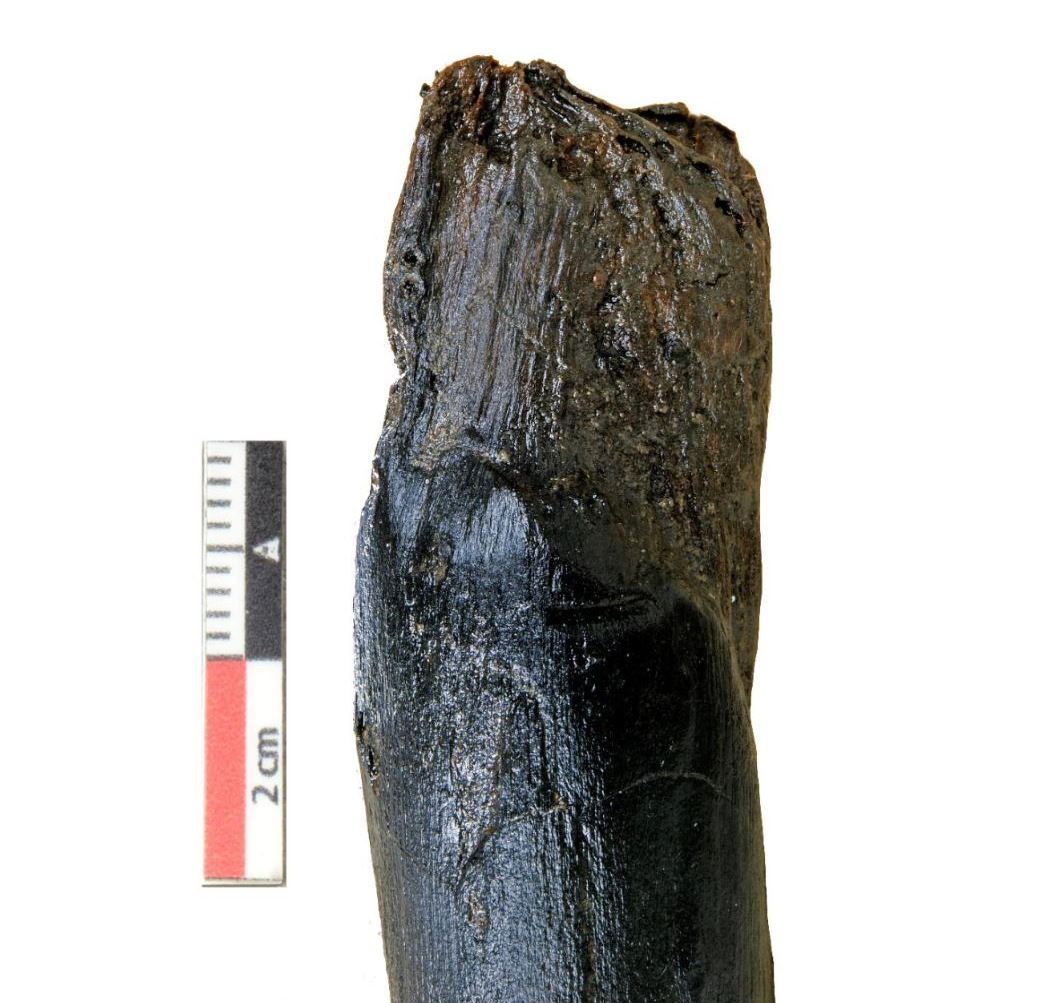
The first is a piece of a deciduous shrub or tree trunk, which bears clear signs of having been processed to function as a tool, as well as signs of wear from subsequent use. It is thought that it could have been used either to facilitate the removal of tree bark or as a digging tool. The second is a very small piece of willow or perhaps poplar wood and appears to have been worked so that it could be held in the hand. This is a completely new type of tool that has been observed for the first time and therefore its use is not yet known.

The findings from the Marathoussa 1 site (two kilometers northwest of Megalopolis) date back 430,000 years and belong to the middle of the Middle Pleistocene (part of the Ice Age), which lasted from approximately 774,000 to 129,000 years ago! This means that in the Megalopolis area, 430,000 years ago, an ancestor of Homo sapiens had the idea of working wood to better serve his needs. According to Ms. Harvati, "the Middle Pleistocene is a particularly important period in human evolution, as it is characterized by an unprecedented diversity of human species, while during this period there was an increase in brain size, the development of complex behaviors and technological innovations."
The two artifacts are not the only remarkable wooden finds from the excavation at Marathoussa 1. A larger piece of a hornbeam trunk was also found, bearing deep grooves that are not consistent with human processing. It is speculated that these were made by a large carnivorous animal, perhaps a bear. This leads us to conclude that whoever this ancestor of man was who lived in the area 430,000 years ago, he would have had to coexist with large carnivorous animals and there was probably great competition between them.

A total of 144 wooden elements were found during the excavation periods of 2015-2019. After thorough examination and analysis in the laboratory, which included high-resolution CT scans, the two artifacts were identified. In one sample, the wood had been removed from both sides at one end, creating a sharp shape that could not have been produced by any natural process, but was the result of human processing. Other indications of human intervention were the cut marks on both objects.
One of the questions answered by these excavations and findings, is that the Balkan Peninsula was a refuge for early humans during the glacial periods of the Middle Pleistocene, when the northernmost regions of Eurasia were covered by ice and were not conducive to survival. Ms. Harvati, in collaboration with the Ephorate of Paleoanthropology and Speleology of the Ministry of Culture, chose the site of the lignite mines of Megalopolis for her research because the mining process had brought various geological layers to light there.
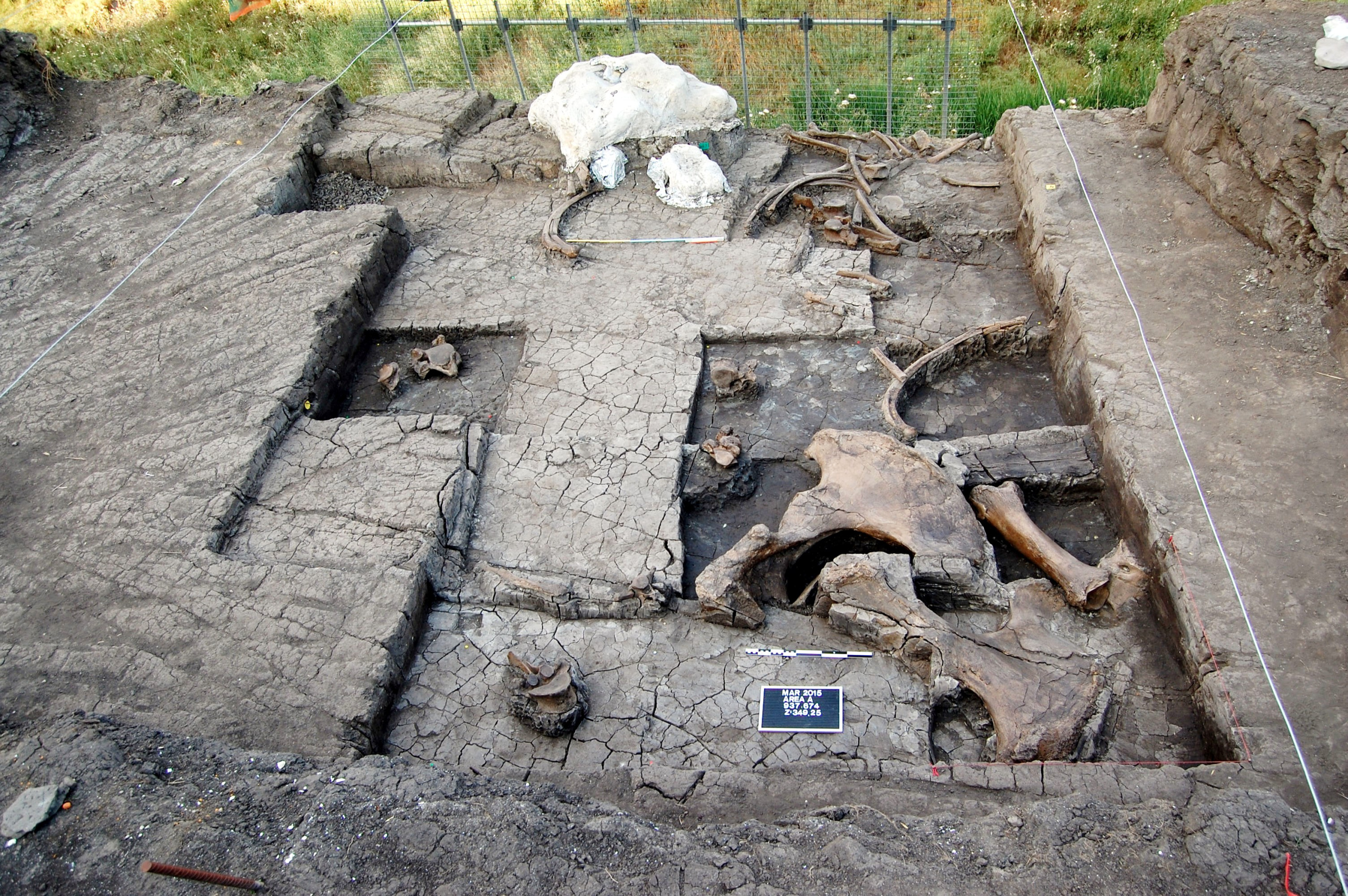
It is characteristic that the Marathoussa 1 site was located in an old section of the lignite mine, at a depth of approximately 30 meters below the original surface of the earth. We must bear in mind that the further back in geological time one wants to go, the deeper one must dig in search of evidence. Ms. Harvati's team managed to reconstruct the climatic and ecological conditions that prevailed in the wider area of Megalopolis during the Middle Pleistocene, while the dating of the different geological strata was of key importance, allowing researchers to place the artifacts unearthed during the excavations in chronological order.
The excavation brought to light more than 2,000 stone and bone tools, as well as fossils of small and large mammals, birds, amphibians, and fish. It is noteworthy that the fossils of at least two elephants of the now extinct species Palaeoloxodon antiquus were found in the area. Finally, plant and other organic remains, such as seeds, pollen, and wood of various species, were found, completing the puzzle of life in the area 430,000 years ago, at the height of the ice age.
During the Middle Pleistocene, Megalopolis basin was a lake or lakeside ecosystem that satisfied the basic need of living organisms for water. At the same time, it provided food for carnivores, as all animals flocked there, while the fertile soil around the lake favored the growth of various plant species. The reconstruction of the environment and its inhabitants in the Middle Pleistocene Megalopolis, confirms the view that the Balkans in general and Greece in particular served as refuges for animal and plant species during the ice ages.
However, according to Ms. Harvati, it seems that there were also refuges within the refuges. That is, areas with low but tolerable temperatures, a permanent supply of water, and vegetation capable of supporting life. These served as small "arks" where animals, plants and human groups were able to survive and then, when conditions became more favorable, spread northward and colonize the entire European continent. In other words, the Megalopolis basin – and probably other areas yet to be discovered – preserved life in Europe when conditions were more than adverse. This is the conclusion that can be drawn from the two small wooden tools, which highlight the adaptability and ingenuity of Paleolithic humans.
The excavations are continuing thanks to third consecutive funding from the European Research Council (ERC) programs, as well as support from the German Research Foundation. Scientists from Aristotle University of Thessaloniki, the University of Ioannina, the Ministry of Culture, and the American School of Classical Studies in Athens are participating in the research.
* Main photo: Panoramic view of Megalopolis. The two DEI power stations can be seen in the distance. Between them lies the site of Marathousa 1, where the wooden tools were discovered. ©️ Municipality of Megalopolis
*Sources: tovima.gr, tharrosnews.gr, PNAS Journal