ROUTE DESCRIPTIONS
THE GRAVEL OF MARATHON
ROUTE
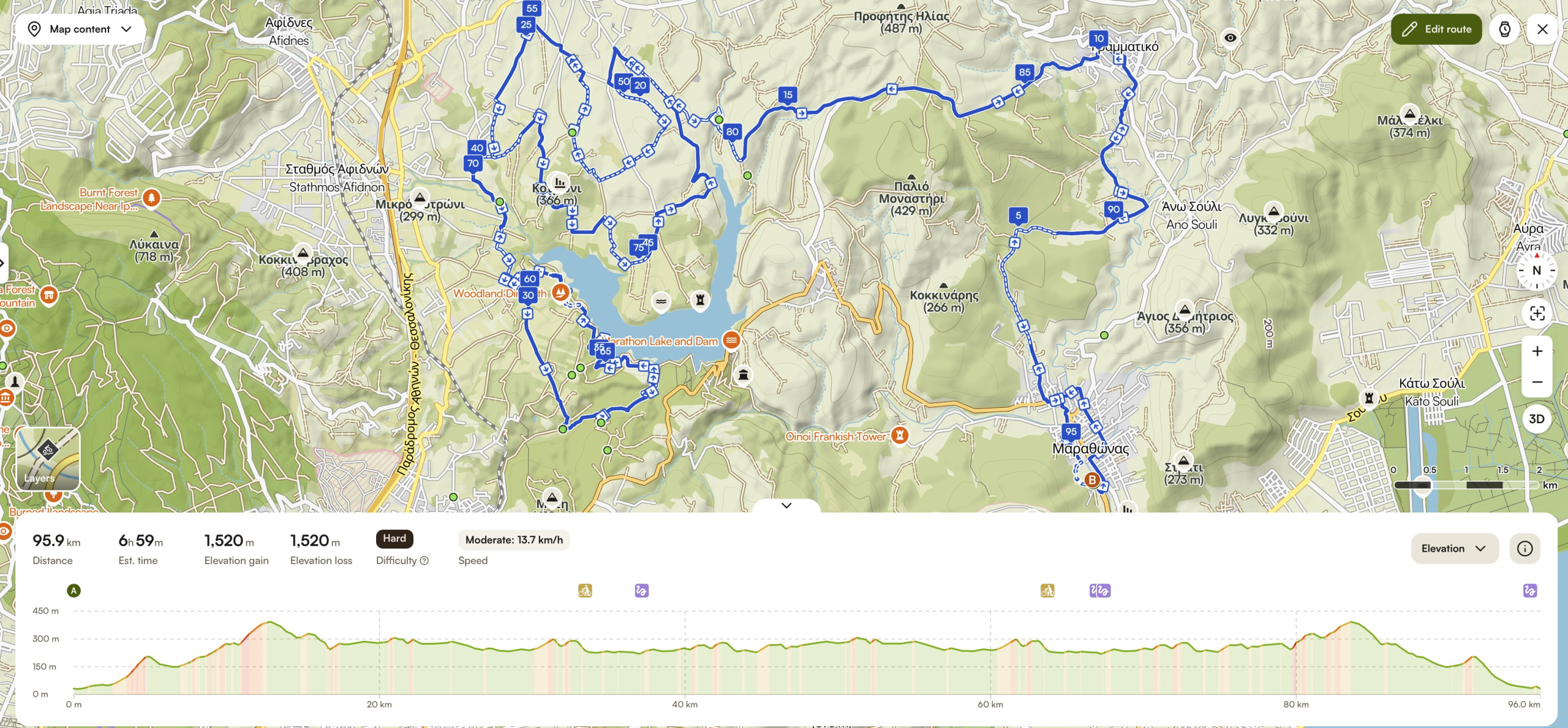
95km
Participants can choose between two demanding routesthe long one of 96 kilometres with 1,320 metres of elevation gain, and the shorter one of 65 kilometres with 1,150 metres of elevation gain. Both are ridden 75% on dirt
The long course awards qualification spots for the 2027 UCI Gravel World Championships to the elite men's and women's categories, the men's 19-59 categories and the women's 19-49 categories. The short course awards spots to the men's 60+ and women's 50+ categories.
The start of both courses will be given at the Marathon Stadium. After crossing the town, riders will soon begin a 2-kilometre climb on rocky terrain, with an average gradient of 6% and a maximum of 9%. They will then pass through the village of Grammatiko and, after 5 kilometres of asphalt, follow a dirt track that leads to a shallow stream, followed by a tough 500-metre climb.
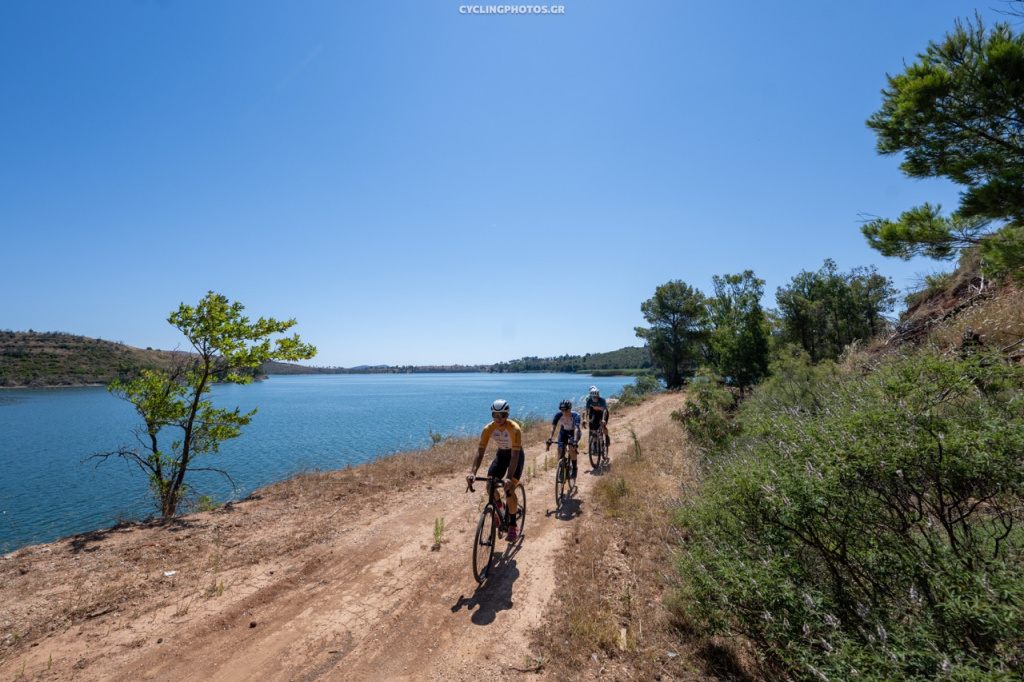
Straight afterwards they will reach the start of the 31-kilometre loop, where they will find the first aid station, together with a mechanical support point and an ambulance with paramedics. From there they will follow a rural route, with dirt and asphalt alternating for 16 kilometres, until they reach the entrance to Lake Marathon, where the second aid station, mechanical support point and first-aid post will be located. For the next 4 kilometres they will ride beside the lake on soft dirt.
Having completed the circuit of the lake, they will return to a rural route alongside the greenhouses and cross another shallow stream. A surprise then awaits them: a 200-metre climb on soft dirt, with the gradient reaching 12%! The next 6 kilometres of dirt road will bring riders to the end of the loop, completing the first 31-kilometre circuit, which they will repeat two more times on the long course and once more on the short course.
Straight afterwards, participants will take the road back, following in reverse the same route that first brought them to the start of the 31-kilometre loop: Grammatiko, Ano Souli and Marathon.
The Gravel of Marathon will end in the centre of Marathon, and on reaching the finish line, every rider is sure to feel the satisfaction of taking part in a personal “Battle of Marathon”, only this time with bicycles as “weapons” and dirt roads as the “battlefield”!
The short course of The Gravel of Marathon
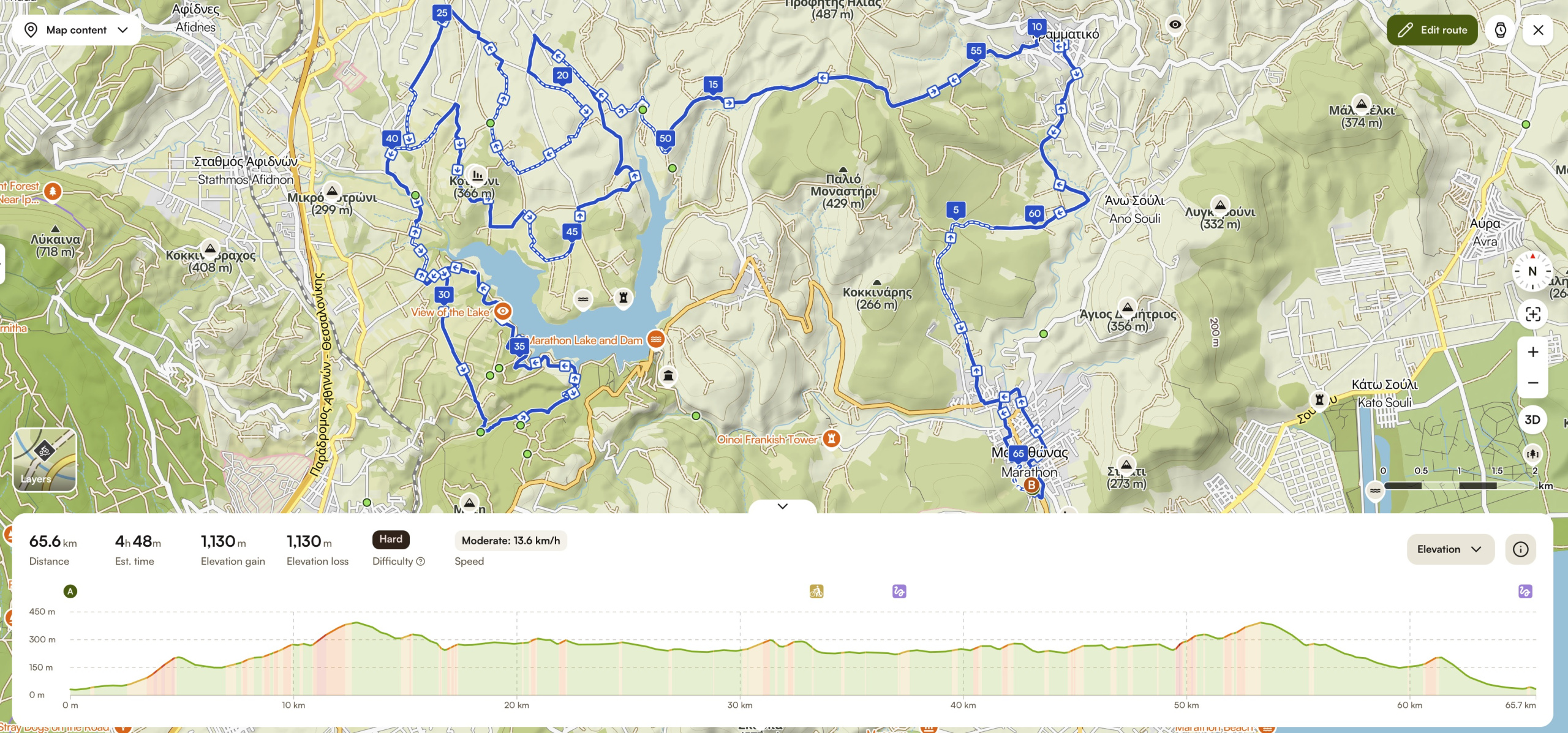
65km
The short course of The Gravel of Marathon covers 65 kilometres with 1,150 metres of elevation gain, and 75% of it is on dirt. It is the same route as the long course, with one difference: riders complete the loop around the lake once instead of twice. The short course awards qualification spots for the 2027 UCI Gravel World Championships to the men's 60+ and women's 50+ categories.
The start will be given at the Marathon Stadium. After crossing the town, riders will soon begin a 2-kilometre climb on rocky terrain, with an average gradient of 6% and a maximum of 9%. They will then pass through the village of Grammatiko and, after 5 kilometres of asphalt, follow a dirt track that leads to a shallow stream, followed by a tough 500-metre climb.
Straight afterwards they will reach the start of the 31-kilometre loop, where they will find the first aid station, together with a mechanical support point and an ambulance with paramedics. From there they will follow a rural route, with dirt and asphalt alternating for 16 kilometres, until they reach the entrance to Lake Marathon, where the second aid station, mechanical support point and first-aid post will be located. For the next 4 kilometres they will ride beside the lake on soft dirt.
Having completed the circuit of the lake, they will return to a rural route alongside the greenhouses and cross another shallow stream. A surprise then awaits them: a 200-metre climb on soft dirt, with the gradient reaching 12%! The next 6 kilometres of dirt road will bring riders to the end of the loop. On the short course, this 31-kilometre loop is ridden once, rather than twice as on the long course.
Straight afterwards, participants will take the road back, following in reverse the same route that first brought them to the start of the 31-kilometre loop: Grammatiko, Ano Souli and Marathon.
The Gravel of Marathon will end in the centre of Marathon, and on reaching the finish line, every rider is sure to feel the satisfaction of taking part in a personal “Battle of Marathon”, only this time with bicycles as “weapons” and dirt roads as the “battlefield”!
A guide for the lap around Lake Marathon
The Gravel of Marathon
Which Tyres Should I Choose?
The route of The Gravel of Marathon is neither a pure dirt track nor a road course, and that is the key to choosing tyres. Some 75% of it is on dirt: rocky terrain on the first climb, rural sections where dirt alternates with asphalt, two shallow streams, 4 kilometres of soft dirt beside the lake and a 200-metre climb on soft dirt with a gradient of up to 22%. You need a tyre that rolls fast when the road allows it, grips on soft ground and withstands the rocks.
The ideal width for this route is 45 mm, and we do not recommend anything narrower than 40 mm. A wider tyre allows you to lower the pressure, which gives more traction on soft dirt and on the 12% climb, absorbs bumps and tires the hands and back less over a race that lasts for hours. Below 40 mm, the pressure has to rise on rocky terrain to protect the rim, and both traction and comfort are lost while the risk of punctures increases. Before you buy, check how much width your frame and rim can take, because not every gravel bike accepts 45 mm.
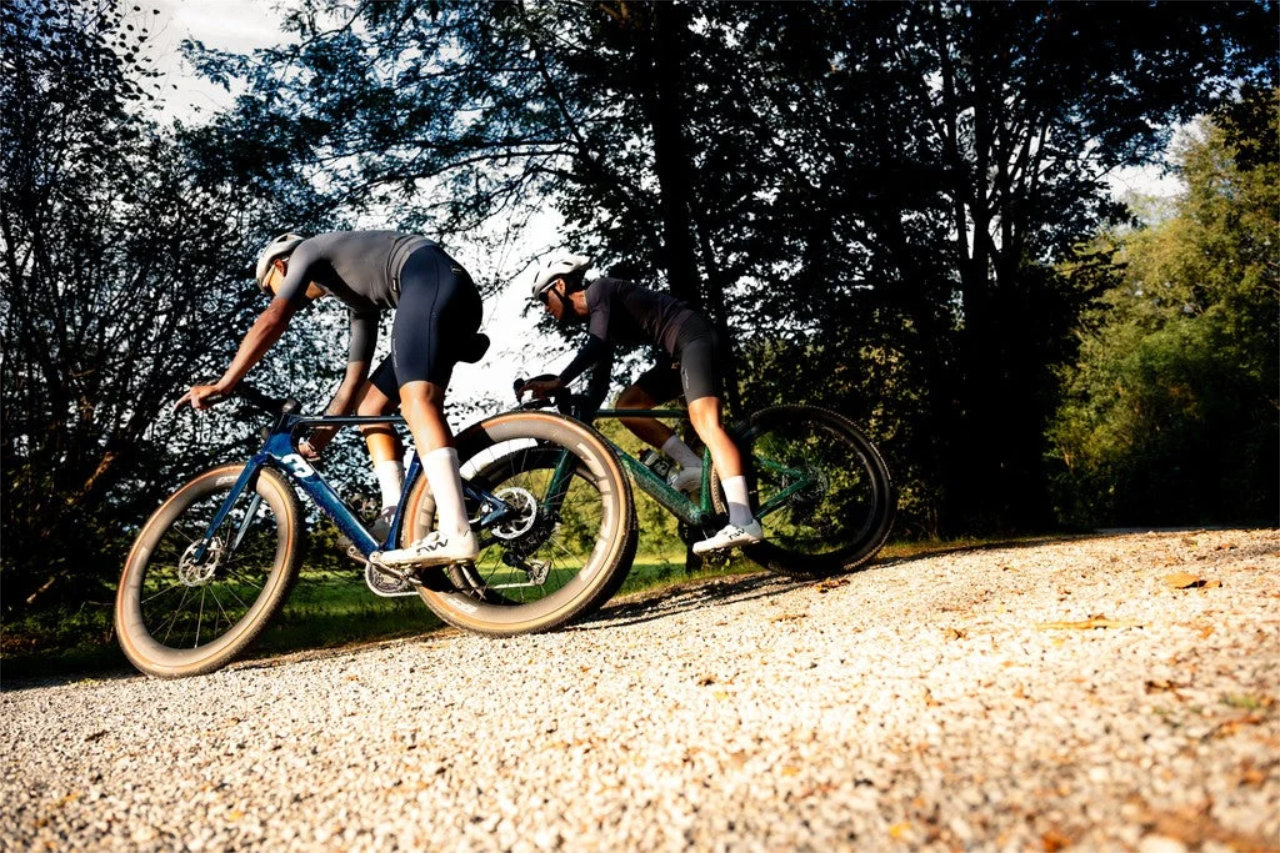
For the tread, look for something between the two extremes: a tyre with a low or medium profile, with denser, lower knobs in the centre to roll on asphalt and firm dirt, and more pronounced side knobs to grip in corners and on soft ground. A completely smooth tyre will struggle on the dirt beside the lake and on the 12% climb, while a mountain bike tyre with aggressive knobs will cost you time and energy on the asphalt and rural sections, which are not few. Those racing to compete can choose a faster tread, and those who simply want to complete the experience safely a more secure one.
Choose tubeless tyres with sealant and reinforced sidewalls. Tubeless allows you to run a lower pressure without the fear of a pinch flat and seals small punctures on its own, while reinforced sidewalls withstand rocky terrain better. Ultralight road tyres, or tyres built for races on clean dirt, do not suit this route. If it is your first time with tubeless, prepare the bike several days in advance and refresh the sealant a few weeks before the race, because over time it dries out and loses its effectiveness.
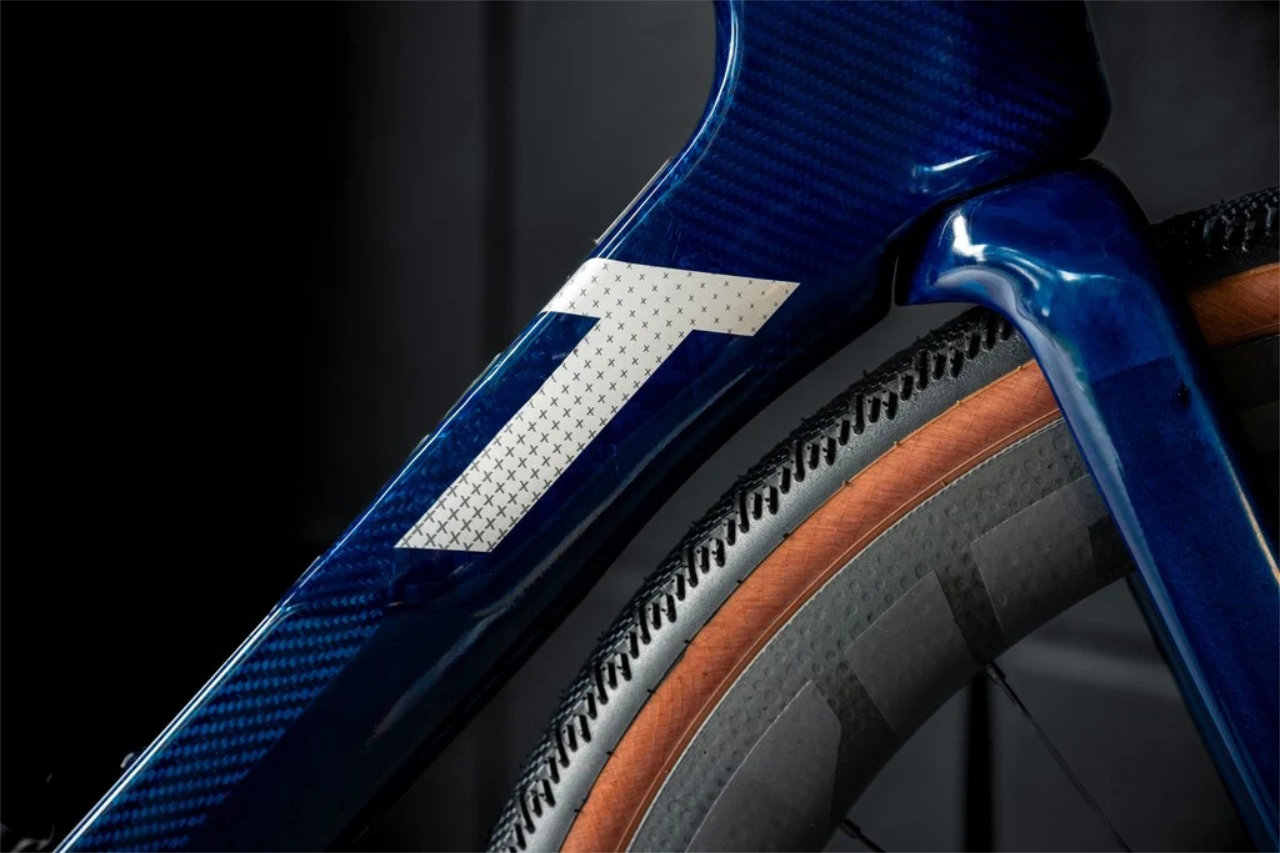
There is no single pressure that suits everyone, because it depends on your weight, rim width and tyre. As a starting point for a 70-75 kg rider on 45 mm tubeless tyres, try around 1.7-1.9 bar at the front and 1.9-2.1 bar at the rear (roughly 25-30 psi). Lighter riders go lower still, and heavier riders go higher. The pressure should be low enough to grip and absorb, but not so low that the tyre squirms in corners or the rim strikes the rocks. Make the final adjustment on a test ride over similar terrain, and measure with a pressure gauge, because the gauge on a pump is often inaccurate at low pressures.
Ride a few times on the new tyres before the race, so that you know them and they have bedded in, and check the sidewalls for cuts. Do not change tyres in the final days. On the course you will find mechanical support points, but do not rely on them alone: bring a tubeless repair kit, a spare inner tube, a pump or CO2 cartridges and a multi-tool. The Bike Expo on 13 and 14 November at Kotzia Square is a good opportunity to see gravel bike models and accessories up close, just before the start.
In addition, there will be two technical support points on the course to help you if you run into a more serious problem.
In short: 45 mm tyres (not below 40 mm), tubeless, with reinforced sidewalls, a low or medium-profile tread with side knobs, and a pressure you find through testing. With this setup you will enjoy both the lap around the lake and your own “Battle of Marathon”.


